Interest in cannabidiol products has expanded, but product quality remains uneven across international markets. Grand View Research estimates that the global CBD market will continue growing through the decade, while noting differences in regional regulation and product standards. These estimates describe market activity, not proof that every oil is safe or effective.
This Purekana Cbd Oil Review examines PureKana alongside ten options that Chinese buyers may encounter online or through cross-border channels. The comparison will focus on ingredient transparency, batch testing, manufacturing information, dosage clarity, packaging, seller reliability, and refund policies. It will not treat marketing language as clinical evidence. The World Health Organization’s 2018 critical review reported that pure CBD showed limited evidence of dependence potential, but it also emphasized the need for further research and careful product evaluation. That distinction matters.
Details matter.
A bottle may look professional, yet its laboratory report could be missing, outdated, or difficult to match with the batch number. Buyers should also check current Chinese import rules, labeling requirements, customs policies, and official health guidance before purchasing. Regulations can change quickly. A product available abroad may not be appropriate for domestic sale or personal importation.
This guide aims to offer practical, evidence-aware information rather than a definitive medical recommendation. Rankings can simplify decisions, but they can also hide important differences. Some conclusions may remain uncertain because public testing data is incomplete. Readers should verify certificates directly, review the full ingredient list, and consult a qualified healthcare professional about possible interactions.
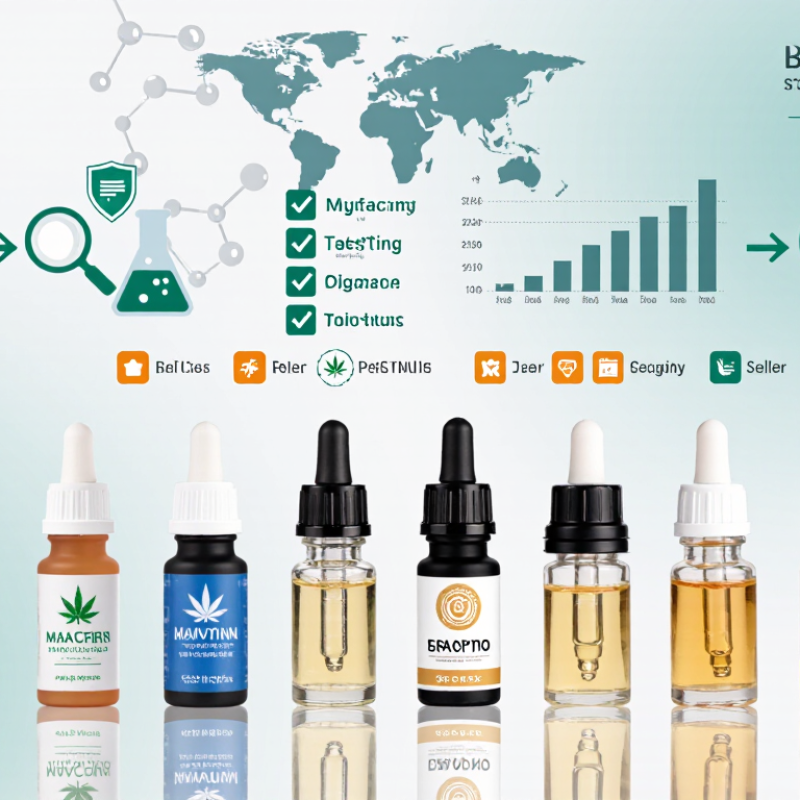
CBD oil is a liquid extract containing cannabidiol, a non-intoxicating compound from hemp. It is usually blended with coconut, hemp-seed, or another carrier oil. Unlike THC, CBD does not normally create a “high,” but product effects can vary.
CBD appears to influence the endocannabinoid system, which helps regulate sleep, mood, pain signals, and immune activity. The mechanism sounds simple, but human evidence remains uneven. The World Health Organization reported in 2018 that pure CBD showed no clear abuse potential, while also noting limited clinical evidence. The U.S. Food and Drug Administration warns that many consumer products lack reliable safety and quality data. That warning matters. Independent laboratory testing can reveal inaccurate CBD levels or unwanted contaminants. Grand View Research estimated the global CBD market at about 7.59 billion dollars in 2023, showing strong demand, not guaranteed effectiveness. Market growth is not medical proof.
Tips: Check the batch certificate, CBD concentration, extraction method, and testing laboratory. Choose products with clear ingredients and traceable manufacturing details. Start cautiously, and discuss CBD with a qualified healthcare professional if you take medication. CBD may interact with certain drugs. Pregnancy, liver conditions, and persistent symptoms require extra care. I would not treat online reviews as clinical evidence; even careful buyers can overestimate personal experience.
When comparing CBD oil options in China, inspect the ingredient panel before judging the price. Most formulas use hemp-derived CBD, a carrier oil, and sometimes botanical terpenes. Carrier oils may include MCT, hemp seed, or olive oil. CBD isolate contains mainly CBD. Broad-spectrum extracts include other hemp compounds, while full-spectrum extracts may contain trace THC. Check local regulations carefully.
Potency needs a practical reading. A 10 ml bottle containing 500 mg CBD provides about 50 mg per ml. A one-milliliter dropper may therefore deliver 50 mg, not 500 mg. Product labels can confuse even careful buyers. The National Academies’ 2017 report found strong evidence for purified CBD in specific seizure disorders, but ordinary oils are not equivalent medicines. The World Health Organization’s 2018 review also noted limited safety data. Choose products with independent certificates of analysis, batch numbers, and testing for heavy metals, pesticides, solvents, and microbial contamination. Product types differ. Tinctures offer adjustable servings, capsules provide consistency, and topicals suit localized application. Evidence for many popular uses remains incomplete.
Tips: Compare CBD per serving, not bottle size. Confirm the extract type and carrier oil. Avoid vague “hemp oil” labels. Review the laboratory report date. Ask a qualified healthcare professional about medication interactions, pregnancy, or liver conditions. I would not treat attractive packaging as proof of quality. That shortcut often fails.
| Option | Product Type | Common CBD Potency Range | Primary Ingredients | Cannabinoid Profile | Typical Use Characteristics | Buyer Verification Points |
|---|---|---|---|---|---|---|
| 1 | Broad-Spectrum CBD Oil | 300–3,000 mg per 30 ml bottle | CBD extract, MCT oil or hemp seed oil, optional natural flavor | CBD with other hemp compounds; THC is intended to be removed or kept undetectable | Suitable for buyers seeking a non-isolate formula without intentionally added THC | Check the certificate of analysis (COA), THC result, batch number, and extraction method |
| 2 | Full-Spectrum CBD Oil | 300–3,000 mg per 30 ml bottle | Full-spectrum hemp extract, MCT oil or olive oil | CBD plus other naturally occurring cannabinoids, terpenes, and hemp compounds; may contain trace THC | Chosen by buyers who prefer a whole-plant extract profile | Confirm the exact THC concentration because “full-spectrum” does not mean THC-free |
| 3 | CBD Isolate Oil | 250–2,500 mg per 30 ml bottle | Purified CBD isolate, MCT oil, olive oil, or another carrier oil | CBD as the principal cannabinoid; normally marketed as THC-free | A simple option for buyers avoiding other cannabinoids and hemp flavors | Look for independent testing that confirms CBD identity, potency, and non-detectable THC |
| 4 | Low-Potency CBD Oil | 100–500 mg per 30 ml bottle | CBD extract, MCT oil or hemp seed oil | May be isolate, broad-spectrum, or full-spectrum depending on the formula | Allows small measured amounts and may be easier for first-time adult users to evaluate | Compare CBD per millilitre, not only the total bottle amount |
| 5 | High-Potency CBD Oil | 1,000–5,000 mg per 30 ml bottle | Concentrated CBD extract, MCT oil or olive oil | Can be isolate, broad-spectrum, or full-spectrum | Provides more CBD in a smaller liquid volume; precise measuring is important | Verify the concentration per drop or millilitre and use the supplied graduated dropper |
| 6 | Water-Soluble CBD Formula | 100–1,000 mg per bottle | CBD extract, emulsifier, water, glycerin, and flavoring; some formulas use carrier oils | May use isolate, broad-spectrum, or full-spectrum CBD | Designed to disperse in water or beverages more readily than conventional oil | Check whether the stated amount is CBD content or total hemp extract and review preservative details |
| 7 | CBD Softgel Capsules | 10–50 mg CBD per capsule; commonly 30–60 capsules per pack | CBD extract, carrier oil, capsule shell, and sometimes antioxidants | Usually isolate or broad-spectrum, but full-spectrum versions also exist | Offers consistent pre-measured servings without a hemp taste | Check CBD per capsule, capsule ingredients, allergen information, and third-party testing |
| 8 | CBD Topical Oil or Balm | 250–1,500 mg CBD per container | CBD extract, plant oils, waxes or butters, and optional botanical ingredients | May contain isolate, broad-spectrum, or full-spectrum hemp extract | Intended for external application; it is not the same as an ingestible CBD oil | Confirm “external use only,” avoid damaged skin, and review fragrance or essential-oil ingredients |
| 9 | CBD Oil with Terpenes | 300–2,000 mg per 30 ml bottle | CBD extract, carrier oil, and added or naturally retained terpenes | Often broad-spectrum or full-spectrum; isolate formulas may have terpenes added separately | Provides a stronger botanical flavor and aroma than plain isolate oil | Check terpene source, allergen disclosures, CBD amount, and the independent COA |
| 10 | Flavored CBD Tincture | 300–1,500 mg per 30 ml bottle | CBD extract, MCT oil or hemp seed oil, natural flavor, and sometimes sweetener | Available in isolate, broad-spectrum, and full-spectrum formulations | A liquid format with flavoring intended to make oral use more palatable | Review sweeteners, flavor allergens, expiration date, serving size, and batch-specific potency results |
Data note: Potency figures are representative market ranges for generic CBD product formats, not claims about any specific company or brand. Actual concentrations and ingredients vary by product. CBD products may interact with medicines, and regulatory requirements differ by country, including China; verify import, customs, labeling, and permitted-ingredient rules before purchasing.
Comparing CBD oils in China requires more than checking price or concentration. Start with local legal requirements. Sale, import, possession, and delivery rules may differ. Verify current information through official government sources, not only seller statements. A product can look professional online and still lack compliant documentation. When uncertain, pause before ordering.
Examine the certificate of analysis from an independent laboratory. Check the batch number, test date, cannabinoid profile, and contaminant screening. The measured content should reasonably match the package label. Review the carrier oil, flavorings, allergens, and storage instructions. Clear ingredient lists build trust. Medical promises do not. Any product claiming to cure anxiety, pain, or illness deserves careful skepticism.
Price comparisons should include shipping, taxes, testing access, and refund conditions. Check whether the packaging provides traceable contact details and suitable local labeling. Customer service should answer specific questions without avoiding them. One common mistake is treating higher concentration as better value. It may not suit every user. I also think buyers sometimes trust polished reviews too quickly. Independent evidence is still limited, and personal experiences cannot replace professional advice. Keep invoices and laboratory documents for reference.
For China-based buyers, CBD oil requires careful checks on safety, legality, testing, and product handling. Rules differ by jurisdiction and can change quickly. Confirm the current requirements with Chinese customs, health authorities, and the destination market before ordering. Do not rely on marketplace claims alone.
The World Health Organization’s 2018 Expert Committee review found no evidence of major public-health risks from pure CBD at that time, but it also noted important data gaps. The U.S. Food and Drug Administration has reported concerns about liver effects, drug interactions, and inconsistent product quality. This matters for people using prescription medicines. A cautious buyer should request a recent certificate of analysis from an ISO/IEC 17025-accredited laboratory. The report should match the exact batch and show cannabinoid levels, heavy metals, pesticides, solvents, microbes, and residual contaminants.
Check the label twice. Does the bottle show a batch number, production date, dosage per serving, and storage instructions? A QR code is not proof by itself. Independent testing is stronger when the laboratory identity and report date are visible. I would also compare the stated CBD amount with the laboratory result, allowing for normal measurement variation. Some labels still look precise without being reliable. Store the bottle away from heat and sunlight, and avoid products with unclear ingredients or medical promises. Professional advice is sensible for pregnancy, liver conditions, or regular medication use.
Ten non-brand criteria to verify before purchase. The scores indicate screening priority, not market share, product quality, or legal approval.
China-related CBD rules can vary by product category, THC content, intended use, import status, and local enforcement. Buyers should confirm current requirements with qualified customs, legal, and medical professionals. Safety references: WHO Expert Committee on Drug Dependence and the U.S. FDA CBD consumer guidance.
Chinese buyers should judge CBD oil by evidence, not attractive packaging. Grand View Research estimated the global CBD market at about US$7.59 billion in 2023, showing rapid growth but also greater quality risks. A reliable product should provide a batch-specific certificate of analysis from an independent ISO/IEC 17025-accredited laboratory. Check cannabinoid levels, pesticides, heavy metals, microbes, and residual solvents.
Read the label beside a kitchen scale, not just a social media review. The bottle should show net volume, ingredients, batch number, expiry date, storage instructions, and a verifiable laboratory link. Avoid products using vague terms such as “pure” or “medical grade” without supporting documents. Research reports often measure sales, not safety. That distinction matters.
For buyers in China Confirm current customs, platform, and import requirements before ordering. Rules can differ by product type and destination. Products containing restricted cannabinoids may create serious compliance problems, even when sold elsewhere. Choose clear dosage information and begin only after consulting a qualified healthcare professional, especially when taking prescription medicine. Personal testing can be useful, but it is not proof of medical benefit. I would also question unusually cheap oils; low price may reflect weak testing, though that is not always true.