Leave Your Message

7 Tips for Buying CBD Distillate Legally Worldwide?

Buying Cbd Distillate legally worldwide requires more than comparing prices or admiring a polished product page. Rules differ between countries, states, and sometimes individual provinces. A bottle accepted in one market may be restricted at customs in another. This guide, “7 Tips for Buying CBD Distillate Legally Worldwide,” focuses on careful decisions, not shortcuts.

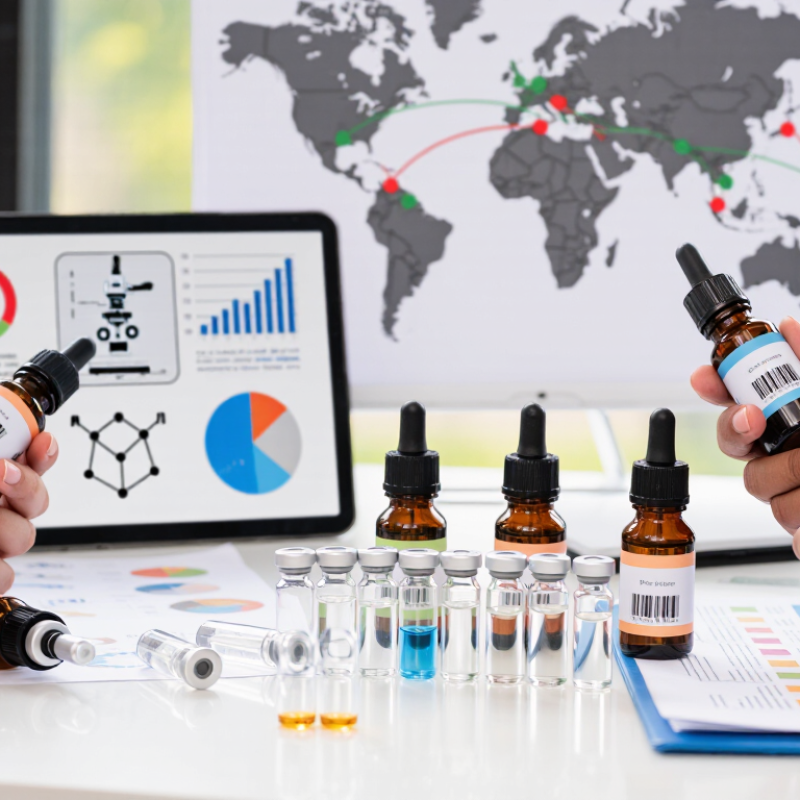
Dr. Ethan Russo, a respected cannabinoid researcher, has said, “The endocannabinoid system is involved in the regulation of virtually every physiological system.” His observation supports a practical lesson: CBD products deserve evidence-based evaluation, not exaggerated promises. Buyers should check the product’s exact CBD content, THC level, extraction details, batch number, and independent laboratory report. The certificate should match the package in your hand. Small details matter.

A reliable seller should clearly explain sourcing, testing, storage, refunds, and destination-country restrictions. Look for recent laboratory results that identify cannabinoids, contaminants, pesticides, heavy metals, and residual solvents. Do not rely on “legal worldwide” claims. No single label can replace local verification. Import rules may also concern packaging, language, health claims, or courier policies.

This process is not perfectly simple. Even official guidance can be unclear or updated without much warning. I may sound cautious, but that is intentional. A cheaper product is not a safer purchase when documentation is missing. Before ordering, contact the relevant regulator, customs office, or licensed professional in your location. Responsible buying means accepting uncertainty, checking evidence, and refusing products that cannot prove what they contain.
7 Tips for Buying CBD Distillate Legally Worldwide?

Define CBD Distillate and Its Legal Classification

CBD distillate is a refined cannabis extract containing concentrated cannabidiol and other minor cannabinoids. It is not automatically pure CBD. Small amounts of tetrahydrocannabinol may remain, depending on processing and local limits. The World Health Organization’s 2018 Expert Committee review found no evidence of abuse or dependence potential for pure CBD. However, that finding does not create a worldwide legal exemption. Each country may classify distillate as a food ingredient, cosmetic component, medicine, controlled product, or restricted agricultural derivative.

Tip: Check the destination country and the product’s origin separately. In the United States, federal hemp rules generally use a 0.3% delta-9 THC threshold by dry weight, but state rules and agency requirements can differ. In the European Union, CBD products may face Novel Food controls, national restrictions, and product-specific safety reviews. EFSA’s 2024 assessment proposed a provisional safe intake of 10 milligrams daily for healthy adults. That figure concerns safety, not automatic market approval.

Tip: Request a recent, batch-specific certificate of analysis. It should show CBD concentration, THC content, contaminants, solvents, and testing methods. Prefer testing from an ISO/IEC 17025-accredited laboratory. A clear label helps, but labels can still be incomplete. This is the uncomfortable part. “Legal” may mean legal to manufacture, not legal to import, sell, or possess. Keep invoices, batch numbers, and customs guidance. Rules change, and one online seller’s assurance is not reliable legal evidence.
Check Local CBD Laws and THC Limits

Buying CBD distillate legally worldwide starts with local law, not online reviews. Rules differ by country, state, and product category. Check the destination country’s official regulator before ordering. A product legal in one market may still be refused at customs.

Look for the permitted THC limit. Some jurisdictions use 0.2% or 0.3% THC for hemp, but finished products can face stricter rules. The European Commission’s Regulation (EU) 2023/915 sets maximum THC levels for certain hemp foods, including 3.0 mg/kg for hemp seeds and 7.5 mg/kg for hemp seed oil. These limits do not automatically legalize CBD distillate. Read the exact category.

Request a recent, independent certificate of analysis. It should show CBD concentration, THC quantity, batch number, testing date, pesticides, solvents, heavy metals, and microbiological results. Check whether the laboratory uses validated methods. The World Health Organization’s 2018 critical review found no evidence that pure CBD produces effects typical of dependence, but that finding does not override national law. Avoid products making medical promises. In the United States, regulatory guidance still treats CBD differently from approved medicines and foods. That distinction matters.

Verify seller registration. Confirm age rules. Review import conditions. Keep invoices and laboratory documents.

My own cautious rule is simple: if the THC result says “not detected,” ask for the detection limit. “Not detected” is not the same as zero.

A small oversight can create a large customs problem. Even experienced buyers sometimes trust a global website too quickly. Local verification remains the safer habit.

Verify Product Testing, Labels, and Certificates

7 Tips for Buying CBD Distillate Legally Worldwide?

Verify Product Testing, Labels, and Certificates

Buying CBD distillate across borders requires more than comparing prices. Rules differ by country, and some regions restrict cannabinoids, imports, or product claims. Check the destination country’s official customs and health authority websites before ordering. A seller’s statement that a product is “legal everywhere” is not reliable evidence.

Request a recent certificate of analysis for the exact batch. It should identify the testing laboratory, sample date, batch number, and testing methods. Look for measured CBD content, other cannabinoids, pesticides, heavy metals, solvents, and microbial results. Independent laboratories with recognized accreditation provide stronger evidence. Check the batch.

Read the physical label carefully. It should show the net quantity, ingredient list, cannabinoid amounts, lot code, production date, storage guidance, and responsible contact details. The certificate and label must match. A polished document is not proof by itself. I would pause when data is missing, even if the product looks professional. Packaging should avoid medical promises and unclear dosage instructions. Keep invoices, certificates, and import records for your files. Requirements can change, and online information may become outdated. When uncertainty remains, ask a qualified local regulatory adviser before purchasing or transporting the product.

Assess Seller Licensing and International Shipping Rules

Buying CBD distillate legally worldwide requires more than checking a product description. Seller licensing should be your first practical filter. Ask for the company’s legal name, registration number, operating address, and relevant authorization. Verify these details through an official government or regulatory database. A polished website proves little. It can still hide outdated information.

Request a recent, batch-specific certificate of analysis from an independent laboratory. It should identify CBD content, confirm compliance with local limits, and screen for contaminants. Check the testing date and matching batch number. Do not accept a generic document. A certificate can still be outdated. Sellers should also provide accurate labels, invoices, age requirements, and clear refund terms. These details show whether the business understands controlled product rules.

International shipping creates a separate risk. The destination country may require an import permit, special labeling, language translations, or laboratory records. Some regions restrict CBD products, even when the seller operates legally elsewhere. Contact the destination customs authority before placing an order. Ask the seller which carrier handles customs documentation and who pays duties or inspection fees. Never rely on a promise that a parcel will “pass unnoticed.” That approach is neither reliable nor responsible. Rules change, and my own checklist would need regular review. Choose only products confirmed lawful in both the shipping origin and destination.

7 Tips for Buying CBD Distillate Legally Worldwide? — Assess Seller Licensing and International Shipping Rules

CBD distillate laws differ by destination, product type, THC content, intended use, and shipping route. The checkpoints below are practical due-diligence guidance, not a substitute for written advice from the relevant customs authority or a qualified local lawyer.

Tip What to Verify Before Paying Jurisdiction or Route Example Relevant Legal Checkpoint Shipping Risk Evidence to Request
1. Confirm the exact product classification Identify whether the distillate is intended for a food, supplement, cosmetic, vape product, medicine, research use, or manufacturing input. Confirm the THC concentration and whether the product contains other controlled cannabinoids. All destinations A product may be permitted in one category but prohibited or subject to pre-market authorization in another. “CBD” alone does not establish legality. Customs may classify the shipment differently from the seller, resulting in detention, seizure, or return. Product specification sheet, intended-use statement, cannabinoid profile, ingredient list, and tariff or customs classification proposed by the shipper.
2. Check the seller’s licensing and registration Verify that the seller is licensed for the activity it is performing: cultivation, extraction, processing, wholesale, export, or manufacture. Check the license number directly with the issuing authority. United States and other regulated markets In the United States, hemp production is regulated through approved state, tribal, or federal plans, while food, dietary-supplement, cosmetic, and drug claims may trigger separate federal requirements. A seller may be legally registered in its home jurisdiction but still be unable to export or supply the product to the destination country. Current license certificate, license status shown on an official government database, registered business address, and export authorization where required.
3. Verify the THC limit using an independent laboratory report Require a recent certificate of analysis from an ISO/IEC 17025-accredited laboratory. Confirm the tested lot number, sample date, total THC calculation, CBD concentration, and detection of contaminants. United States hemp route Federally defined hemp in the United States must contain no more than 0.3% delta-9 THC by dry weight. State rules, product rules, and testing requirements may be stricter. A product that meets a source-country threshold may fail the destination’s testing method, especially when the destination regulates total THC or applies a lower limit. Full laboratory report covering cannabinoids, pesticides, heavy metals, residual solvents, microbial contaminants, and the applicable testing method.
4. Treat European Union food and supplement sales as a separate compliance question Determine whether the product is a food, food ingredient, cosmetic, medicine, or technical material. Check the rules of the specific destination member state rather than relying only on general EU marketing language. European Union CBD extracts and products containing CBD are generally treated as novel foods in the EU and require authorization before lawful food marketing. National rules for cosmetics, medicines, and THC also apply. Parcel carriers and customs authorities may request proof of authorization, ingredient compliance, or a specific import purpose. Novel-food status assessment, destination-country regulatory confirmation, product formula, THC result, labeling draft, and import documentation.
5. Check the destination country’s import rules before dispatch Obtain written confirmation from the destination customs authority, competent health regulator, or licensed customs broker. Ask specifically about CBD distillate, THC traces, intended use, quantity, and required permits. Canada, Australia, Japan, and other non-domestic routes Canada regulates cannabis and CBD within its cannabis framework, and importing or exporting cannabis products generally requires specific authorization. Australia and Japan also apply product-specific controls and strict cannabinoid or THC requirements. Postal acceptance by the carrier does not prove import legality. The shipment can still be refused or seized at the border. Import permit, customs ruling, broker’s written classification, consignee authorization, and any required health or quarantine documents.
6. Review marketing claims and labeling Remove disease, treatment, prevention, or therapeutic claims unless the product is lawfully authorized as a medicine. Check required warnings, batch identification, net quantity, ingredients, and age restrictions. United States, United Kingdom, European Union, and other markets CBD products marketed with medical claims may be regulated as medicines. In the United Kingdom, many ingestible CBD products are subject to the novel-food framework, and food operators must meet applicable safety and labeling requirements. Customs or regulators may review website copy, invoices, labels, and social-media claims when deciding how the goods are classified. Final label artwork, product webpage text, invoice description, batch code, safety data, and documentation supporting any permitted claims.
7. Use a documented, compliant shipping process Confirm that the carrier accepts the product, the route is permitted, the package declaration is accurate, and the importer of record is prepared to handle customs questions. International courier or postal shipment Export controls, import controls, dangerous-goods rules, carrier policies, and destination-country cannabis laws can apply simultaneously. A “hemp-derived” description does not override these rules. High risk if undocumented
Misdeclaration or concealment can create civil, criminal, customs, and insurance consequences.
Commercial invoice, packing list, accurate HS classification, certificate of origin, certificate of analysis, permits, customs broker instructions, and shipment-tracking records.

Regulatory position: laws and enforcement policies can change frequently. Verify current requirements with the applicable customs authority, health regulator, agricultural authority, and licensed legal adviser before purchasing or shipping CBD distillate.

Complete a Legally Compliant Purchase and Keep Records

A legal CBD distillate purchase begins with the destination country, not the seller’s website. Rules vary by jurisdiction, product category, cannabinoid content, labeling, and intended use. Check the current guidance from customs authorities, health regulators, and local legal professionals before placing an order. Never rely on a broad “worldwide shipping” statement.

Ask for a complete certificate of analysis for the exact batch. It should show cannabinoid levels, testing methods, laboratory details, production date, and contaminant screening. Confirm that the laboratory is independent and properly accredited. Request the product specification, safety data sheet, invoice, and origin information. The paperwork should match the container, lot number, and quantity. Small mismatches matter.

I once treated a polished supplier page as proof of compliance. That was a mistake.

Keep a dated compliance file with emails, permits, certificates, payment records, shipping documents, and customs decisions. Store digital copies securely, plus a printed copy for transport. Review the file when laws or product formulas change. Do not make medical claims, relabel the material, or sell it for a use that local rules do not permit. If the seller avoids basic questions, pause the purchase. A cheaper shipment is not worth an unclear legal trail.