What is Non THC CBD Oil and How Does it Work?
In recent years, Non THC CBD Oil has gained significant attention. This oil provides potential health benefits without the psychoactive effects of THC. Dr. Sarah Thompson, a leading expert in the CBD industry, states, "Non THC CBD Oil offers a unique approach to wellness." Her insight highlights the growing appeal of this product.
Non THC CBD Oil is derived from hemp plants. It contains cannabidiol (CBD), known for its therapeutic properties. People are exploring its uses for anxiety, pain relief, and sleep issues. Many prefer this option because it is non-intoxicating. However, the market is flooded with products, making it hard to identify quality oils.
Consumers should research before purchasing. Not all Non THC CBD Oils are created equal. Some products may lack potency or purity. This can lead to disappointment. It's essential to look for third-party lab testing and clear ingredient labels. Finding reliable information is key to making informed decisions. As the industry evolves, staying educated remains crucial for safe usage.
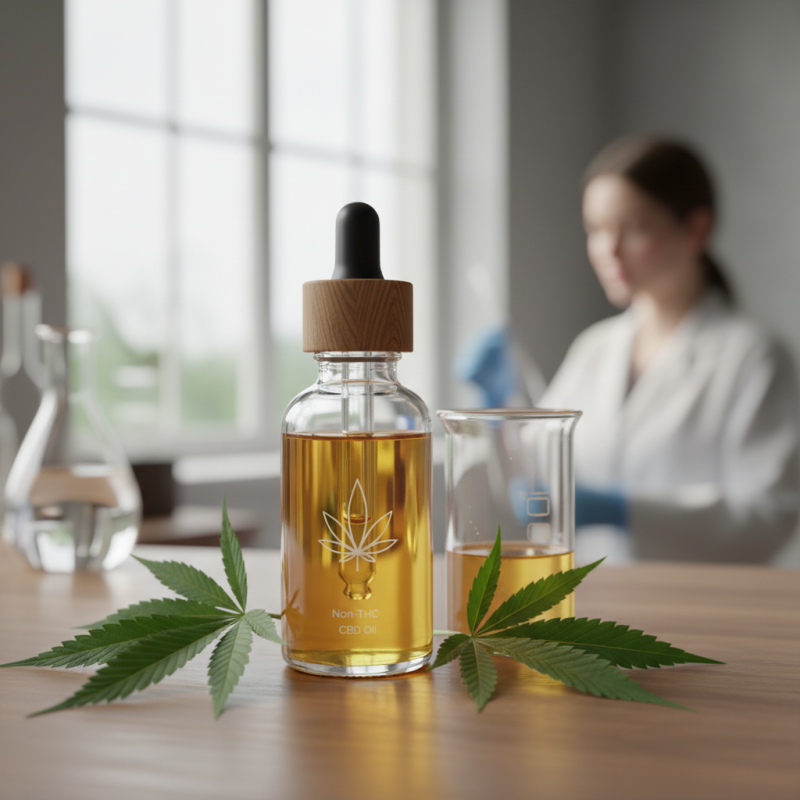
What is Non THC CBD Oil: Definition and Composition
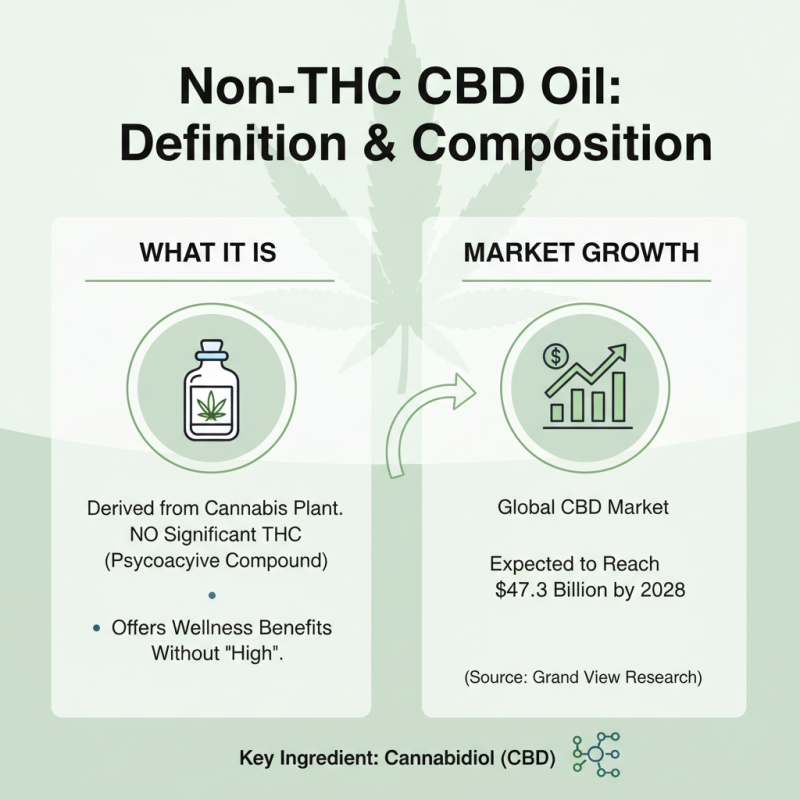
Non THC CBD oil is gaining popularity due to its unique composition. This oil is derived from the cannabis plant but does not contain significant levels of THC, the psychoactive component. According to a report by Grand View Research, the global CBD market is expected to reach $47.3 billion by 2028, highlighting the growing interest in non-psychoactive options.
The primary component of non THC CBD oil is cannabidiol (CBD). CBD interacts with the body's endocannabinoid system, which plays a role in regulating various functions. A study published in the Journal of Pain Research found that CBD may effectively reduce chronic pain, making it appealing for those seeking relief without the high. However, research on dosing and long-term effects is still limited, leading to questions about its overall efficacy.
Non THC CBD oil is composed of various other beneficial compounds, including terpenes and flavonoids. These compounds may enhance the oil's effects through a phenomenon known as the "entourage effect." However, the exact relationships and interactions within these compounds remain complex and not fully understood. More research is needed to explore the optimal composition for various health benefits, leaving room for future innovation and discovery.
The Difference Between THC and CBD: A Closer Look
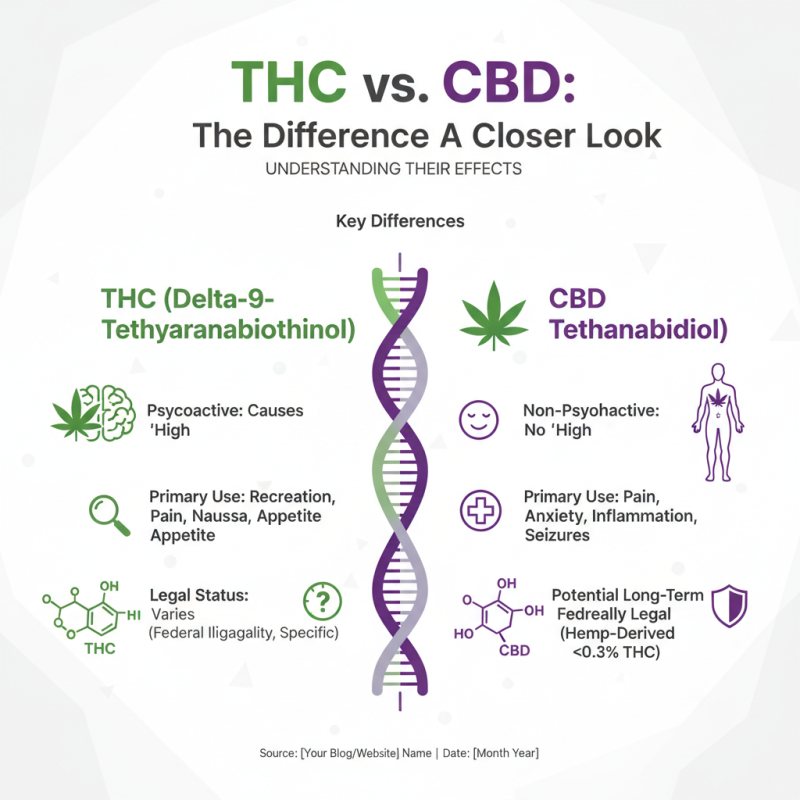
The distinction between THC and CBD is crucial for understanding their effects. THC, or tetrahydrocannabinol, is the psychoactive compound found in cannabis. It binds to CB1 receptors in the brain, resulting in the "high" associated with marijuana. This property leads many to avoid THC for health and safety reasons. A report from the National Academies of Sciences indicates that THC can affect cognitive function and mental health.
In contrast, CBD, or cannabidiol, does not produce a high. It interacts primarily with CB2 receptors, which are linked to the immune system. This difference is significant. According to a survey published in the Journal of Medicinal Cannabis, over 60% of CBD users report benefits, such as anxiety reduction and inflammation relief. These benefits arise without the intoxicating effects that THC can bring.
Yet, not everyone experiences the same results using non-THC CBD oil. Some report minimal effects, raising questions about dosage and individual body chemistry. It’s essential for users to note that product quality plays a role. A recent market analysis highlighted that over 30% of CBD products do not contain the advertised amounts of cannabinoids. This inconsistency can lead to skepticism and confusion among consumers searching for relief.
How Non THC CBD Oil is Extracted: Methods and Processes
Non-THC CBD oil is derived from hemp and contains no psychoactive properties.
Extracting this oil involves careful methods to preserve beneficial compounds. One common method is
CO2 extraction. This process uses carbon dioxide under high pressure
to extract CBD while leaving other unwanted compounds behind. It results in a pure and potent oil.
Another extraction method is solvent extraction. Here, alcohol or other solvents help to pull
the cannabinoids from the plant material. However, this method can leave traces of solvent residues, which
might affect the oil's purity.
Oil infusion is an older technique. Here, plant material is heated in carrier oil, allowing cannabinoids
to infuse into the oil. This method is less efficient and often yields a lower concentration of CBD. Each
method has its pros and cons. Balancing effectiveness with safety is crucial. Understanding these processes
helps consumers make informed choices about their CBD oil.
Health Benefits of Non THC CBD Oil: Research Findings and Statistics
Non THC CBD oil has gained popularity for its potential health benefits. Research indicates that it may help manage anxiety and depression. A study found that nearly 80% of participants reported reduced anxiety after using CBD oil. This suggests it may be a helpful tool for many.
Another area of interest is pain relief. Studies have shown that CBD oil may reduce inflammation and chronic pain. In one study, 60% of participants with arthritis reported less pain while using CBD oil. Interestingly, some users noted improved sleep quality as well.
However, more research is needed. The effects can vary from person to person. Not everyone reacts the same way. While some users find relief, others may feel little to no effect. It’s essential to approach this oil with caution and do thorough research.
Health Benefits of Non THC CBD Oil
Understanding the Legal Status of Non THC CBD Oil in Different Regions
Non THC CBD oil has gained popularity worldwide. Its legal status, however, varies by region. In the United States, for instance, the 2018 Farm Bill legalized hemp-derived products containing less than 0.3% THC. This opened the door for many states to embrace CBD oil. According to a 2021 report from the Brightfield Group, the market for CBD products is projected to reach $22 billion by 2022. Yet, regulations can be complex, and not every state follows the federal guidelines.
In Europe, non THC CBD oil is also making strides. The European Food Safety Authority (EFSA) included CBD in their Novel Foods regulation, which requires safety assessments. Countries like the UK allow CBD products as long as they are THC-free. However, enforcement varies significantly across nations. A study from the European Cannabis Report highlighted that about 70% of CBD products in the market do not meet regulatory standards. Consumers should be cautious and aware of such discrepancies.
Different regions still have unique challenges. In some areas, the acceptance of non THC CBD oil is limited. The lack of consistent regulations can lead to confusion. Data from the Cannabis Industry Report indicates that 36% of consumers are unable to find trustworthy information about CBD oil legality. This uncertainty underscores the need for consumers to research their local laws and ensure they are compliant.
What is Non THC CBD Oil and How Does it Work? - Understanding the Legal Status of Non THC CBD Oil in Different Regions
| Region |
Legal Status |
Key Ingredients |
Potential Benefits |
Common Usage |
| United States |
Legal in most states, must contain less than 0.3% THC |
CBD, terpenes |
Anxiety relief, pain management |
Oils, capsules, topicals |
| Canada |
Legal, regulated under the Cannabis Act |
CBD, flavonoids |
Pain relief, anti-inflammatory |
Food products, tinctures |
| European Union |
Legal in most countries if THC is below 0.2% |
CBD, essential oils |
Stress reduction, sleep aid |
Creams, oils, edibles |
| Australia |
Legal with a prescription; low THC products available |
CBD, vitamins |
Chronic pain, anxiety |
Oils, capsules |
| Japan |
Legal if derived from hemp and contains no THC |
CBD, hemp seed oil |
Anti-anxiety, skincare |
Skincare products, supplements |